
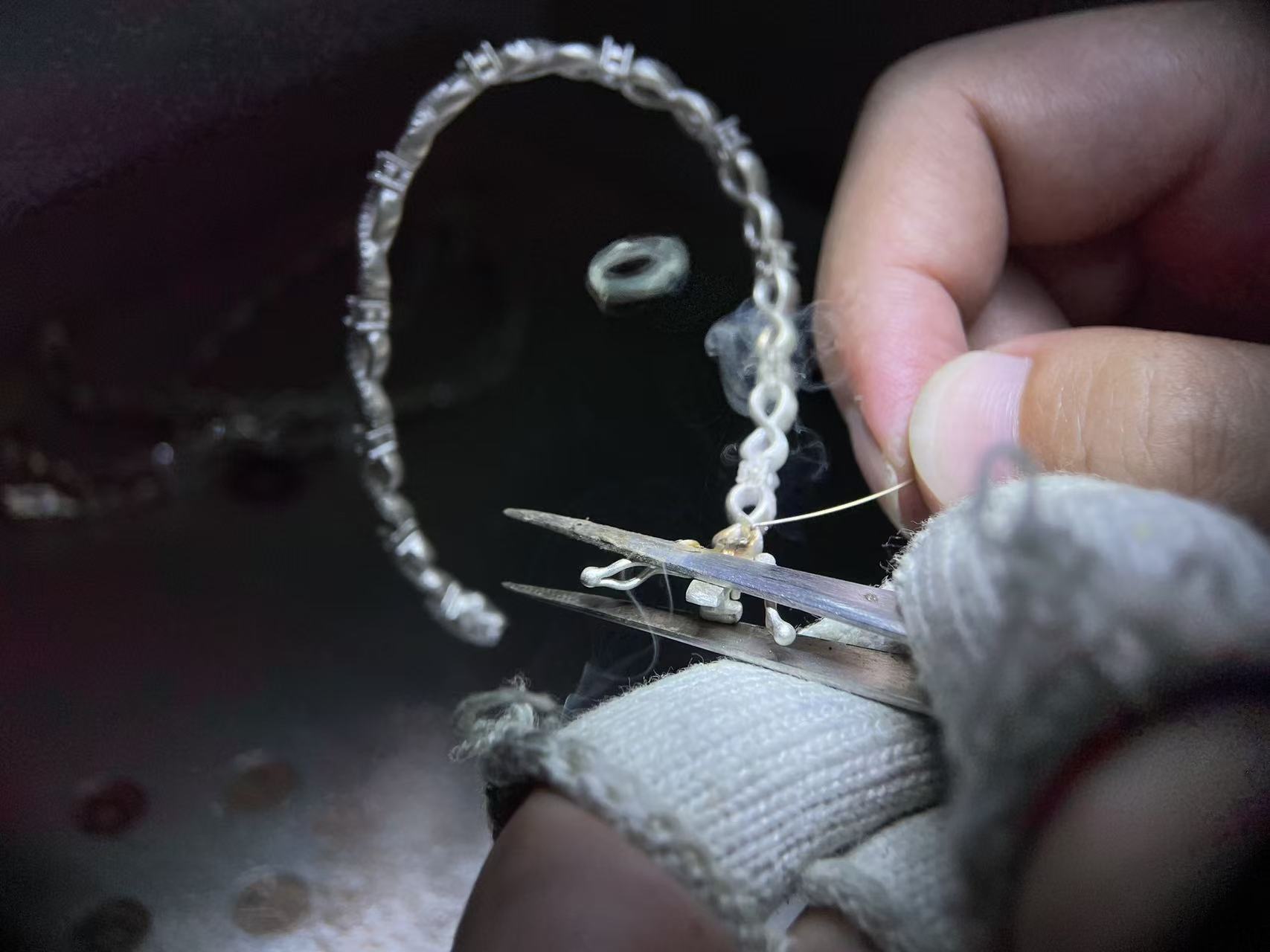
Why Do Jewelry Pieces Break After Long-Term Wear?
Many customers experience this issue:
- Necklace suddenly breaks
- Pendant joint cracks
- Clasp becomes loose
Many people assume the issue is in the main structure, but in reality, the weakest points are usually the connection areas.
Weak Points Where Breakage Usually Happens
The most vulnerable areas in jewelry are usually:
- Necklace connection joints
- Pendant attachment points
- Clasp mechanisms
- Fine chain links
These areas are constantly under tension during daily wear, making them more prone to failure.
Why Are Low-Cost Jewelry Pieces More Likely to Break?
Many low-cost products sacrifice welding quality in order to increase production speed.
Common issues include:
- Insufficient welding depth
- Weak soldering points
- Loose connection structures
Over time, this leads to:
- Cracks
- Breakage
- Loose joints
How We Improve Structural Durability
To improve long-term durability, we apply reinforcement techniques based on different product structures.
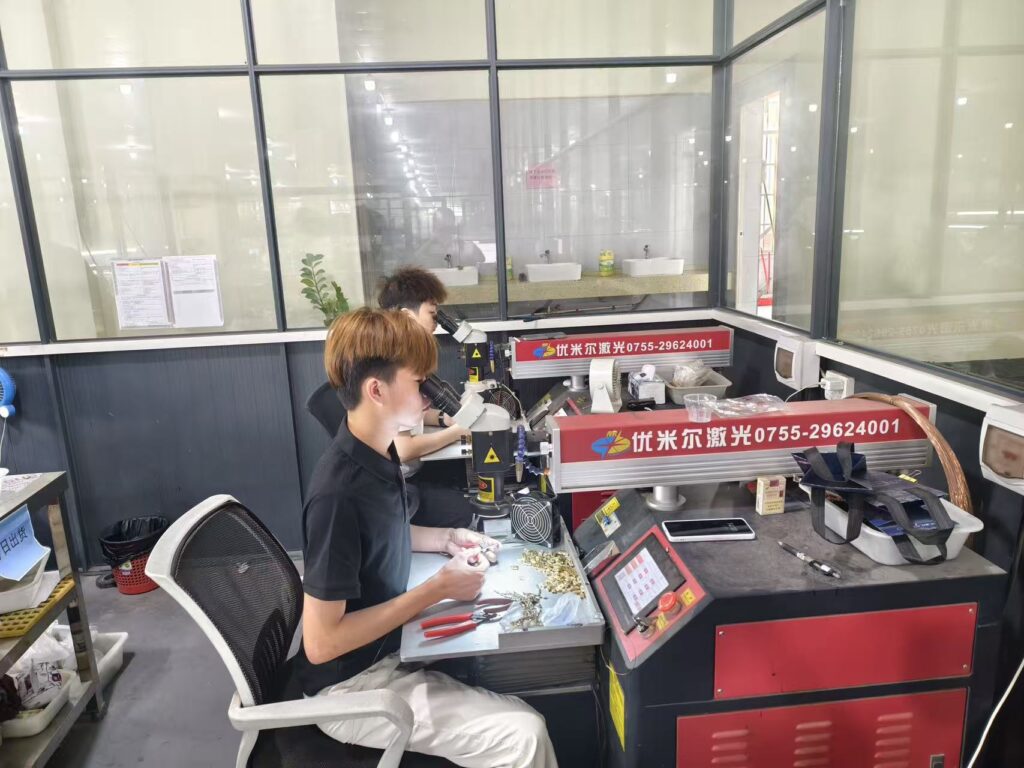
Laser Welding Reinforcement for Critical Areas
For high-risk connection points, we use laser welding for reinforcement.
Compared to traditional soldering, laser welding offers clear advantages:
- Stronger bonding points
- Improved structural stability
- Higher precision
- Better for delicate designs
Especially Suitable For:
- Fine chain jewelry
- Micro-pavé designs
- Complex structural jewelry
These designs are more prone to stress during long-term wear, requiring stronger connection techniques.
Final Conclusion
Jewelry durability depends not only on design, but more importantly on the craftsmanship of key connection points.
Truly durable jewelry must ensure:
✔ Strong structural integrity
✔ Reliable welding quality
✔ Stability under wear