
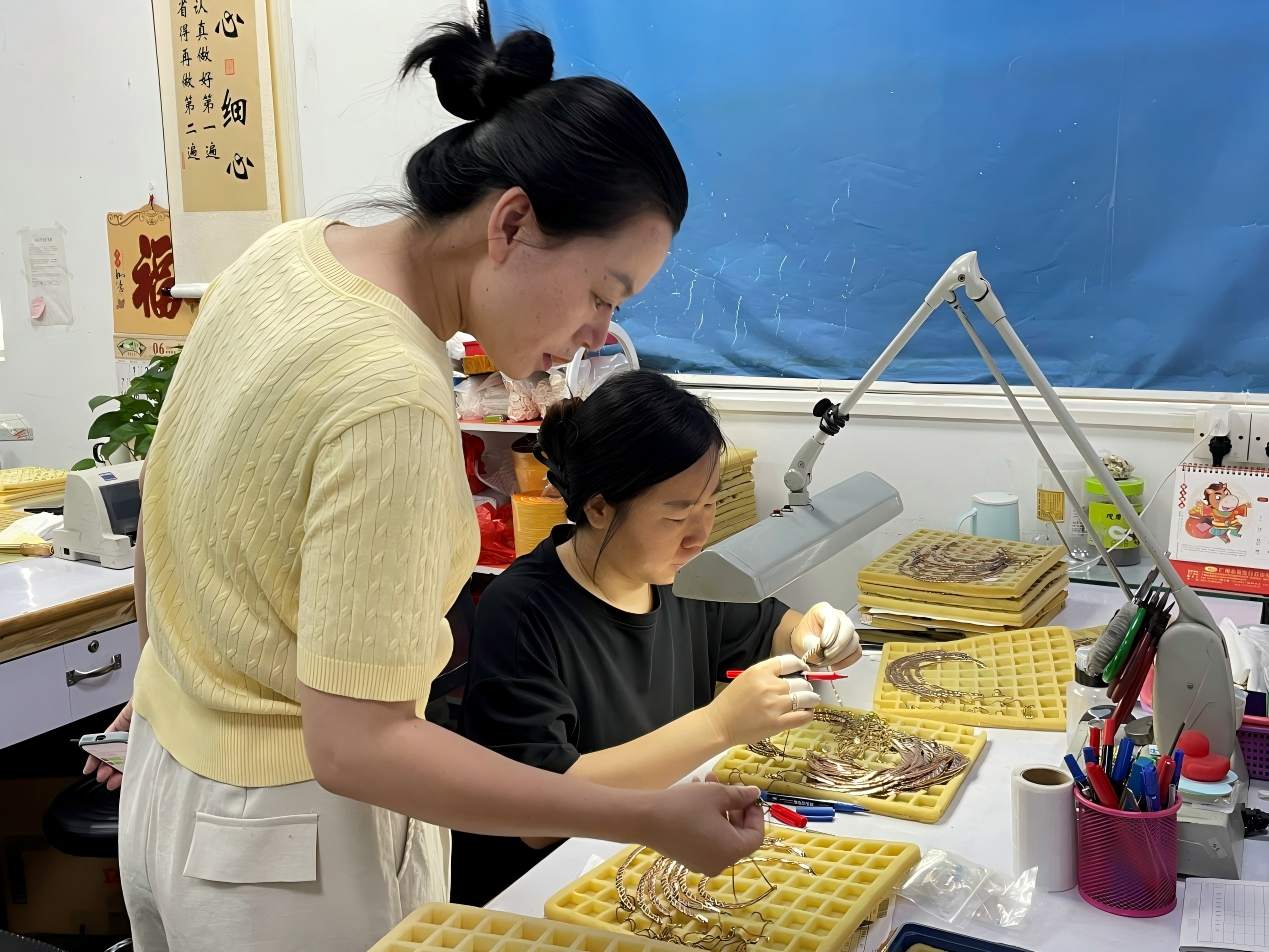
Samples Look Perfect, But Mass Production Falls Apart
Many brands face the same frustrating situation:
The sample looks perfect, but once mass production starts, problems begin to show up.
Common issues include:
- Product not matching approved sample
- Stone loss
- Surface scratches
- Size inconsistencies
- Uneven plating color
- Unstable component quality
In most cases, the issue is not the design itself—but the lack of detail control during production.
Why Is Mass Production So Hard to Keep Consistent?
Jewelry manufacturing is not a single-step process—it involves multiple tightly connected stages.
Any weak point in the process can lead to inconsistent final quality.
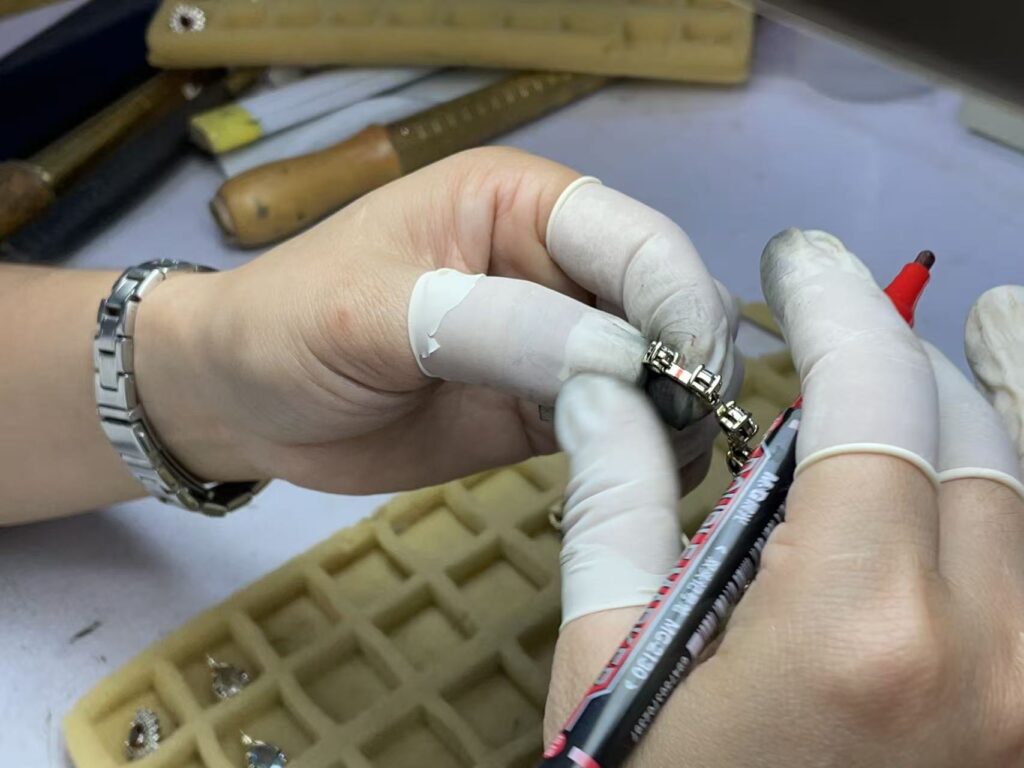
Where Quality Problems Usually Come From
Issues usually come from the following areas:
- Inconsistent craftsmanship execution
- Lack of unified production standards
- Insufficient inspection during key processes
- Error accumulation during mass production
- Differences between manual and semi-automated processes
Why Do Samples and Mass Production Differ So Much?
Samples are usually made by senior technicians individually, with higher precision.
But mass production relies on multiple workers and stages, where small deviations can accumulate.
This results in products that “look similar, but vary in real quality.”
How We Ensure Stable Mass Production Quality
To ensure consistency, we implement a strict three-stage QC system.
Stage 1: Pre-Production Inspection
Before production begins, we check:
- Design drawing verification
- Prototype validation
Ensuring all source data is correct from the beginning.
Stage 2: In-Process Quality Control
Real-time inspection during key production stages:
- Wax models
- Wax setting
- Casting
- Filing and shaping
- Stone setting
- Polishing
Multiple checkpoints help detect and correct issues early.
Stage 3: Final Product Inspection
Before shipment, a full final inspection is performed:
- Size and dimensions
- Stone quality (loose, missing, damaged, discoloration)
- Surface smoothness and brightness
- Plating color consistency
- Component functionality
- Packaging quality
Final Conclusion
For brands, what truly matters is not whether a product can be made—but whether it can be made consistently.
Consistency is the real competitive advantage in mass production.erm.