

True Luxury Comes From the Details You Can’t Always See
When customers first see a piece of jewelry, they are usually drawn to the design.
But what truly defines a “luxury feel” is not just the design—it’s the finishing details.
In today’s highly competitive jewelry market, customers are becoming more demanding about texture and quality.
Common Issues in Low-Cost Jewelry
Many low-cost jewelry pieces often show the following issues during wear:
- Sharp or scratchy edges
- Rough surface finishing
- Dull or uneven plating
- Uncomfortable or irritating to the skin
These issues immediately create a “cheap feel” for the wearer.
The Real Issue: Not the Material, But the Finishing Process
Many people assume the issue comes from materials, but in reality, most quality problems come from insufficient finishing work.
Jewelry is different from standard industrial products—it is extremely sensitive to small details.
Why Hand Polishing Matters So Much
The key factors that determine jewelry quality often rely on skilled manual craftsmanship, including:
- Precise control of design details
- Ongoing adjustments during production
- Fine polishing and surface finishing
- Strict quality refinement and inspection
The advantage of hand finishing is that it is more precise, flexible, and controllable.
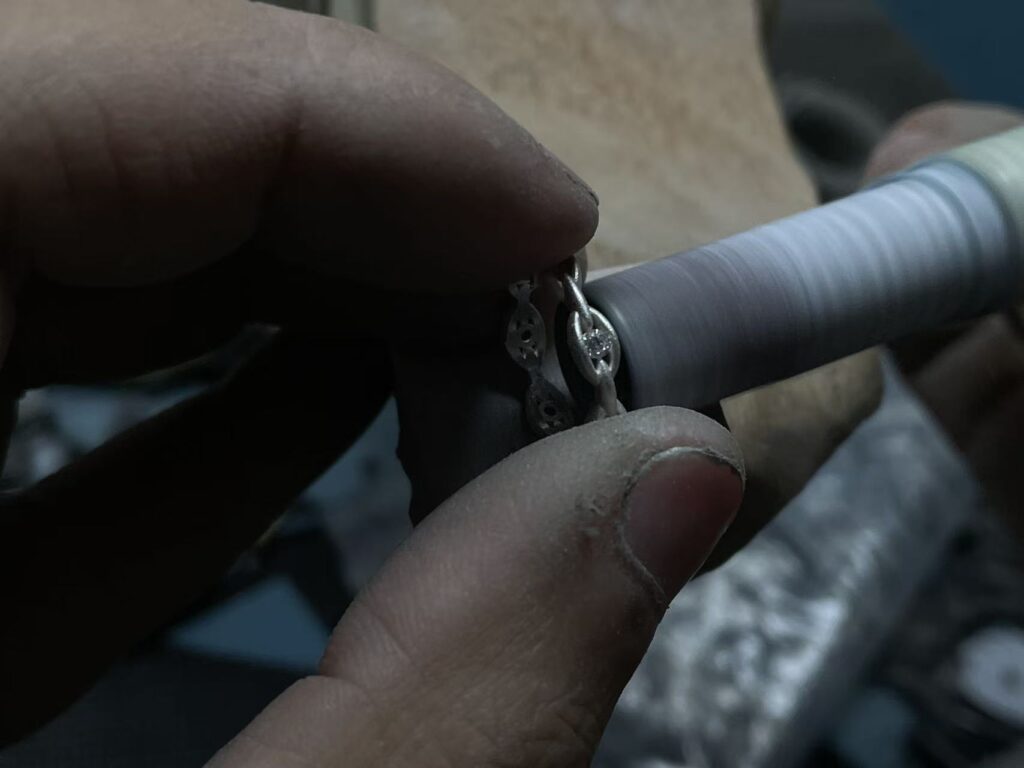
Why We Continue to Rely on Hand Finishing
For different product structures, we perform repeated manual refinement instead of relying solely on machine-based finishing.
This ensures the final product meets higher standards in real wear conditions:
- More comfortable to wear
- More premium appearance
- More natural and refined detailing
- Higher customer repurchase rate
Final Takeaway
True high-quality jewelry is not just about looking shiny—it’s about feeling comfortable when worn.
The value of hand finishing is not to replace machines, but to complete the details machines cannot achieve.